Dongguan Aier Eye Hospital: One City, Three Hospitals and One Clinic, Part of a Global Network
 0769-39003909 0769-39003909
"I can see clearly after just one day of the full-laser surgery. Can I choose it too? I heard that ICL is reversible and safer. Is it more suitable for me?" - Faced with various myopia surgery options such as full-laser surgery, semi-laser surgery, and ICL, many people are caught in a dilemma. However, myopia surgery is not a simple free choice of "doing whatever you want", but a medical decision determined by your ocular conditions. According to statistics, there are more than 600 million myopia patients in China, but it is worrying that more than 60% of patients mainly refer to others' experiences or price factors when choosing surgical methods, rather than professional medical assessments. This article will deeply analyze the "entry rules" of two major surgical methods, corneal laser surgery and ICL lens implantation, from a scientific perspective, to help you avoid common misunderstandings and find the vision correction plan that truly suits you. Corneal laser surgery: Pass these three hurdles first
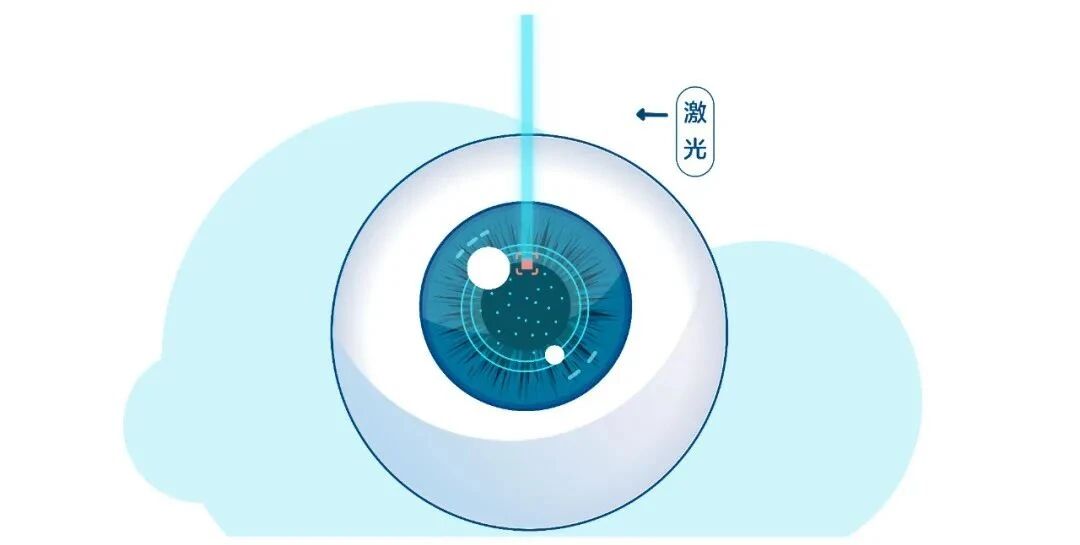
We often hear about half-femtosecond, full-femtosecond, full-laser, etc., all of which belong to corneal laser surgery - simply put, it is a "subtraction surgery": through precise laser ablation of the corneal stroma layer, myopia and astigmatism are corrected. To undergo this type of surgery, one must first pass the following three "entrance exams": 1. Corneal thickness: it cannot be too "thin", otherwise the "cutting" of the cornea will be impossible. Just like the tempered film on a mobile phone, laser surgery is equivalent to "carving and correcting the degree" on this layer of film. If the film itself is already very thin, further ablation may easily lose stability and even increase the risk of eye diseases such as keratoconus. Key points: l The higher the degree of myopia and astigmatism, the more corneal tissue needs to be cut l Even if there is only 300 degrees of myopia, if the cornea is thin, it may be eliminated l Generally, the central corneal thickness is required to be ≥480μm (the standard may vary slightly in different hospitals) 2. Degree of myopia and astigmatism: it cannot "exceed the standard" Laser surgery cannot correct all degrees of myopia, and different surgical methods have clear range limitations: Note: These are general ranges, and specific assessments need to be made in combination with other factors such as corneal thickness. 3. Dry eye/corneal health: there must be no "hidden dangers" If there are certain eye health problems, it may increase the risk of laser surgery: High-risk factors - l Severe dry eye patients: The surgery will temporarily affect the stability of the tear film, and postoperative dry eye symptoms may worsen l Patients with corneal abnormalities: Such as keratitis, tendency towards keratoconus, etc., postoperative recovery is difficult l Patients with ocular surface diseases: Such as severe conjunctivitis, blepharitis, etc. ICL (Intraocular Lens) implantation surgery must be considered first These four points must be kept in mind
For individuals whose corneal conditions are unsuitable for laser surgery, ICL (Intracorneal Lens) implantation offers an alternative option. This "additive surgery" is equivalent to implanting a "high-end contact lens" in the eye, but it also has its own "thresholds": 1. Anterior chamber depth: the lens must "fit" The eye has a "small room" called the anterior chamber, and the ICL lens needs to be placed between the iris and the lens. This "room" must be spacious enough: Basic requirement: anterior chamber depth ≥ 2.8mm Risk warning: too shallow anterior chamber may lead to increased intraocular pressure 2. Fundus health: no "hidden damage" Although the ICL does not cut the cornea, it has higher requirements for the fundus: Must check: whether there are retinal tears, macular lesions, and other issues Special attention: patients with high myopia have a higher risk of retinal degeneration 3. Pupil size: not "too wide" Common problem: halo appears when looking at lights at night Key indicator: pupil diameter should not exceed the optical zone of the ICL lens Impact: too large pupil may affect night vision 4. Age limit: not everyone can have it Best age: 21-45 years old Special consideration: those over 45 years old need to assess presbyopia factors to find a suitable procedure 3 key steps 1. Comprehensive preoperative examination is the foundation A complete set of preoperative examinations usually includes: Basic examination: vision, refraction, intraocular pressure Corneal assessment: corneal topography, corneal thickness measurement Fundus examination: dilated pupil fundus examination, OCT Special measurements: anterior chamber depth, pupil diameter, etc. Important reminder: Discontinue wearing contact lenses before the examination (soft lenses for 1 week, hard lenses for 3 weeks) 2. A personalized plan is more important than "popular" choices The doctor will give recommendations based on the following factors: Eye conditions: examination data are hard indicators Eye habits: for example, regular exercise may be more suitable for full-fledged femtosecond (small incision), and driving at night may require special attention to pupil size Long-term computer use: assess the risk of dry eye Career requirements: certain professions have special requirements for vision 3. Avoid these "choice traps" Be wary of low-price traps: non-standard preoperative examinations may miss risks Refuse to follow the trend: what is suitable for others may not be suitable for you Pay attention to postoperative care: no matter what kind of surgery, care is crucial Postoperative care guide 1. General care points Medication standard: strictly follow the doctor's orders to use eye drops Review schedule: usually 1 day, 1 week, 1 month, 3 months, and 6 months after surgery Eye hygiene: avoid rubbing the eyes to prevent infection 2. Special precautions for laser surgery Protective measures: wear an eye patch to sleep for 1 week after surgery Exercise restrictions: avoid strenuous exercise for 1 month Makeup advice: avoid eye makeup for 2 weeks after surgery 3. Special precautions for ICL Special examinations: regularly check the position of the lens and intraocular pressure Exercise advice: avoid strenuous head movements Long-term follow-up: check the fundus condition annually Common problem Professional answers Q1 Which surgery is safer? There is no absolute answer. Laser surgery technology is mature, and ICL has stronger reversibility. The key to safety lies in preoperative examination and doctor's skills. Q2 Will vision rebound after surgery? A Under the premise of reasonable use of eyes, the probability of rebound is low for those with stable degrees after adulthood. However, excessive use of eyes may lead to new myopia. Q3 Will the surgery hurt? A Surface anesthesia will be used during the surgery, so there is basically no pain during the process. There may be slight discomfort after surgery, which usually eases within 1-3 days. Q4 How long will it take to resume normal use of eyes after surgery? A Laser surgery usually takes 1-3 days, and ICL takes about 1 week. However, it takes 1-3 months to fully stabilize.
If you are still hesitating, why not take the first step and make an appointment at a professional hospital for a comprehensive preoperative examination? This will also allow you to gain a more comprehensive understanding of your own eye condition. Based on comprehensive examination data and guidance from professional doctors, you can choose the most suitable myopia surgery plan for yourself, and enjoy clear vision as soon as possible

咨询电话:
0769-39003909
医院地址:
东莞市虎门镇虎门大道123号